
How UnderCover's Aluminum Panel Construction Actually Handles Impact
A tonneau cover spends its entire working life absorbing impacts — hail, falling branches, careless loading, highway debris. Most covers built from vinyl or soft composites simply dent, tear, or collapse under these strikes. UnderCover's aluminum panel construction takes a different approach: the material bends elastically under load, then springs back to shape once the force is removed.
This resilience isn't an accident. Our engineering team selected 6000-series aerospace aluminum alloy for its specific combination of tensile strength and flex tolerance, then shaped each panel with internal ribbing that distributes impact energy across the entire surface rather than concentrating it at a single point. The result is a cover that survives real-world abuse without splitting, cracking, or requiring panel replacement after the first bad hailstorm.

Why 6000-Series Alloy Beats the Cheaper Alternatives
Most aftermarket covers that advertise ‘aluminum construction’ rely on 5000-series or recycled alloy — softer grades that dent permanently under moderate strikes. UnderCover specs 6061-T6 aluminum, the same alloy used in aircraft fuselages and high-performance bicycle frames.
The T6 temper designation matters as much as the base alloy. It refers to a heat-treatment process that increases yield strength to roughly 40,000 psi while maintaining enough ductility to absorb shock without fracturing. A panel made from this material can flex up to three percent of its length and still return to flat once the load is removed.
This particular alloy also resists corrosion without heavy coatings. The natural oxide layer that forms on 6061 aluminum is self-healing — scratches expose fresh metal that immediately oxidizes again, preventing the kind of rust bloom you see on cheaper steel-panel covers after a single winter.
How Multi-Rib Geometry Spreads Impact Energy
A flat aluminum sheet will dent under concentrated force because all the energy funnels into a single small area. Our panels use a pressed-rib geometry on the underside — parallel ridges running the length of each section that act as structural I-beams.
When a falling object strikes the top surface, the impact energy travels down through the aluminum skin and into the ribs below. Those ribs redirect the force laterally along their length, spreading what would have been a localized dent across several square inches of material. The panel flexes slightly across its entire width, absorbs the energy, then recovers.
This is the same principle suspension bridges use to handle point loads. The ridges also increase the panel’s overall moment of inertia — its resistance to bending — without adding significant weight. A ribbed panel can be thinner and lighter than a flat one while still offering superior impact resistance.
What Actually Happens During a Hail Strike
Hailstones between one and two inches in diameter hit with enough kinetic energy to shatter windshields and crack fiberglass. When the same stone strikes tonneau cover aluminum panels with multi-rib construction, the top skin deforms locally — forming a shallow dimple at the point of contact.
That dimple is the panel doing its job. The aluminum stretches elastically under the strike, converting kinetic energy into temporary deformation. The ribs beneath prevent the dimple from collapsing into a permanent crease by distributing the load. Once the hailstone bounces off, the aluminum’s internal stress pulls the dimple back toward flat.
Smaller strikes — pebbles, acorns, dropped tools — often leave no visible mark at all because the panel’s elastic limit exceeds the energy delivered. Larger impacts may leave a faint surface impression, but the panel remains structurally intact and continues to seal properly. We’ve tested panels under simulated hail bombardment using two-inch ice spheres fired at terminal velocity; the covers survived dozens of strikes without cracking or requiring replacement.

Edge Reinforcement and Why It Matters for Long-Term Integrity
The weakest point on any folding or hinged cover is the edge where two panels meet. Repeated opening and closing cycles concentrate stress along those seams, and a poorly reinforced edge will eventually fatigue and crack.
UnderCover panels use doubled-edge construction — the aluminum folds back on itself along every hinge line and gets mechanically crimped in place. This doubling creates an edge that’s twice as thick as the main panel surface, with significantly higher resistance to bending fatigue.
The hinge hardware itself threads through both layers of aluminum, clamping them together and preventing the kind of work-hardening that causes cracks after a few thousand open-close cycles. This is why you’ll see the same edge-doubling technique on both the Flex and Ultra Flex models — it’s a structural requirement for any folding aluminum cover expected to last more than a couple of seasons.
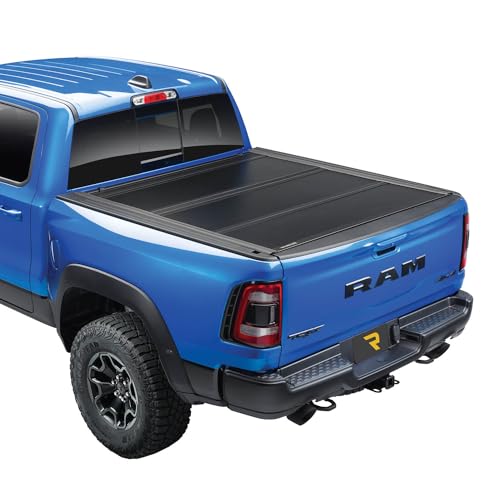
Temperature Cycling and Dimensional Stability
Aluminum’s thermal expansion coefficient is roughly twice that of steel. A six-foot panel sitting in direct summer sun can grow nearly a quarter-inch longer than it was at dawn, then shrink back as the temperature drops overnight.
UnderCover accounts for this expansion with floating hinge mounts — the hardware allows the panel to slide a few millimeters along its length as it expands and contracts, rather than building internal stress. This is critical for dimensional stability. A rigidly mounted panel would eventually warp or bow under repeated thermal cycling.
The powder-coat finish applied to every panel also plays a role in temperature management. The coating’s high reflectivity keeps surface temperatures roughly fifteen degrees cooler than raw aluminum would reach under identical sun exposure, which reduces the total expansion-contraction range the hardware has to accommodate.
Real-World Durability Comes Down to Material and Geometry
Aluminum’s reputation for denting easily comes from experiences with cheap rolled sheet stock — the kind used in disposable pans and siding. Aerospace-grade 6061-T6 alloy behaves completely differently under load. It flexes, absorbs energy, and springs back without permanent deformation.
Combine that material with multi-rib geometry and doubled-edge construction, and you get a tonneau cover that survives the abuse truck beds actually see — hail, falling debris, careless loading, years of thermal cycling. The panels don’t need babying, and they don’t require replacement after the first bad storm. That’s the entire point of engineering a cover properly in the first place.
Common Questions About Aluminum Panel Durability
6061-T6 aluminum is ductile enough to absorb typical bed-loading impacts without cracking. The multi-rib construction distributes the load across the panel width, so even a dropped toolbox or case of beverages won't fracture the material.
You may see a shallow dent from an extremely heavy concentrated load, but the panel will remain structurally sound and continue to seal properly. The alloy's elastic recovery means minor dents often spring back to near-flat on their own.
6061 aluminum forms a self-healing oxide layer that resists corrosion in both salt-spray and high-humidity environments. Scratches or chips in the powder coat expose fresh aluminum that immediately oxidizes again, preventing the deep pitting you see on steel.
We've run accelerated salt-fog testing equivalent to ten years of coastal exposure; panels showed only superficial surface dulling, with no structural degradation or loss of tensile strength. The material does not rust in the traditional sense because it contains no iron.
Most dents in tonneau cover aluminum panels are purely cosmetic and don't affect function. If the dent bothers you, a paintless dent repair technician can often massage it out using the same tools they use on car doors — the process works because the aluminum hasn't work-hardened past its yield point.
Replacement is only necessary if the panel has cracked completely through, which is rare with properly tempered 6061 alloy. Minor creases or surface impressions don't compromise the cover's ability to seal or shed water.
Aluminum panels do produce audible sound when rain strikes them, similar to the sound on a metal roof. The ribbed understructure dampens some of the resonance, but you will hear individual raindrop impacts more clearly than you would with a soft vinyl cover.
Some owners find the sound reassuring — it confirms the cover is still properly seated and hasn't blown open. Others add foam weather stripping along the underside ribs to further dampen the noise. The panels themselves don't amplify sound any more than the aluminum bed itself does.
UnderCover's ribbed aluminum panels are rated to support up to 400 pounds of evenly distributed static load — roughly equivalent to an adult standing on the closed cover. That rating includes a safety margin; the panels won't catastrophically fail even if you exceed it temporarily.
The key phrase is evenly distributed. Concentrated loads — like standing on a single corner — will dent the panel locally because all the weight funnels into a few square inches. If you need to walk on the cover, step near the hinge lines where the doubled-edge construction provides extra support.
Bare aluminum is an excellent thermal conductor, but the powder-coat finish acts as an insulating barrier that reflects most infrared radiation before it reaches the metal surface. Testing shows bed temperatures under a coated aluminum cover run only three to five degrees warmer than ambient air temperature on a sunny day.
That's comparable to fiberglass covers and significantly cooler than black vinyl, which can raise bed temps by fifteen degrees or more. The air gap between the panel and the bed surface also provides convective cooling — heat doesn't transfer efficiently across that space.